Understanding the Different Types of Dental Implants
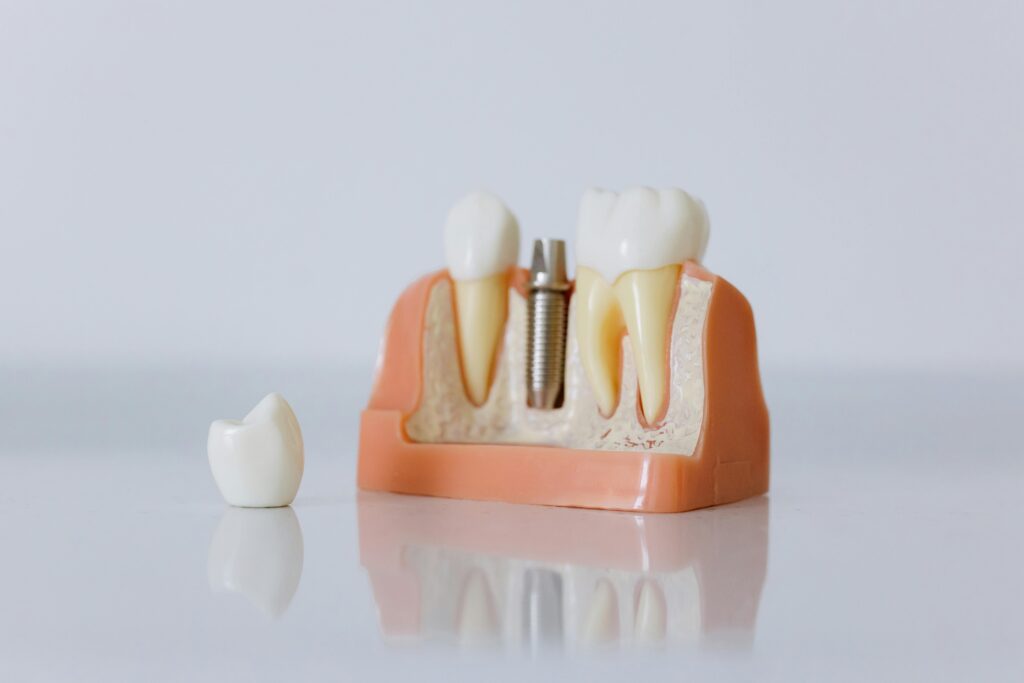

Losing a tooth changes more than a smile. It changes the way food feels, the way words land, and often the way a person carries themselves in a room. I have seen patients arrive thinking they are asking about a single product, only to learn that dental implants come in several forms, each designed for a different clinical problem. That discovery usually brings relief. There is rarely just one path.
The phrase Dental Implants gets used as if it describes one standard treatment. In practice, it covers a family of solutions. The right choice depends on bone volume, gum health, the number of missing teeth, bite forces, medical history, budget, and timing. A healthy 35 year old who lost one front tooth in a bike accident needs a very different plan from a 72 year old who has worn a loose lower denture for 20 years.
Understanding the different types of dental implants helps patients ask better questions and avoid the trap of comparing treatments by price alone. What looks simpler on paper can become the wrong choice in a mouth with thin bone, heavy grinding, or advanced gum disease. On the other hand, a more extensive plan is not automatically better. Good implant treatment is a matter of fit, not excess.
What a dental implant actually is
At its core, a dental implant is an artificial tooth root, usually made of titanium, placed into the jawbone. Over time, the bone bonds to the implant surface in a process called osseointegration. Once that bond is stable, the implant can support a crown, a bridge, or a denture.
Patients often think the visible tooth is the implant. It is not. The full system usually has three parts: the implant body in the bone, an abutment that connects the implant to the restoration, and the restoration itself, such as a crown or denture. That distinction matters because two treatments may both involve implants but differ in how the final teeth are attached, how easy they are to clean, and how they age over time.
The materials and surface technology have improved steadily over the years, but the basic principle remains straightforward. A stable implant needs healthy bone, careful planning, and controlled forces. Without those, even a beautifully placed implant can struggle.
The most common category: endosteal implants
When people talk about dental implants, they are usually referring to endosteal implants. These are placed directly into the jawbone and are the standard option in modern implant dentistry. They are the workhorse of the field because they are versatile, predictable, and supported by the longest clinical track record.
Most endosteal implants are screw shaped cylinders with textured surfaces that encourage bone attachment. They come in different diameters and lengths, which allows the surgeon to adapt the treatment to the anatomy of the site. In a broad lower molar area, a wider implant may be appropriate. In a narrow Dental Implants lower incisor region, the surgeon may need a slim implant or a different restorative plan altogether.
Endosteal implants can support a single crown, multiple crowns, a bridge, or a full arch prosthesis. Their success rates are generally high when they are placed in appropriate conditions and maintained well. That said, “high success” does not mean “maintenance free.” Implants still need good brushing, careful cleaning between teeth, and regular professional review. I have seen excellent work compromised by years of neglect, especially in patients who thought implants could not develop inflammatory problems. They can. The surrounding tissues can become infected or inflamed if plaque control is poor.
Within the broad category of endosteal implants, there are several useful distinctions.
Single tooth implants
A single implant with a crown is often the cleanest way to replace one missing tooth. It avoids preparing the neighboring teeth, which is one of its biggest advantages over a conventional bridge. If the adjacent teeth are untouched and healthy, preserving them matters.
Single tooth implants work especially well when the bone is intact and the gums are healthy. Front tooth replacements demand more precision because the gumline and papillae, the small triangular gum peaks between teeth, must look natural. A millimeter can make a visible difference there. Back tooth implants have different challenges. They take heavier chewing loads, and in patients who grind their teeth, the restoration design has to manage stress carefully.
Implant supported bridges
When several neighboring teeth are missing, placing an implant for every single tooth is not always necessary. An implant supported bridge can span the gap by using two or more implants to support multiple teeth. This is a practical option when the missing teeth are side by side and bone is available at the ends of the space.
A bridge can reduce surgical complexity and cost compared with placing more implants than the case truly needs. The trade off is that the connector areas under the bridge require good hygiene access. Some patients manage that easily with floss threaders or water irrigation devices. Others find it tedious, and that matters because the best treatment on paper is not the best treatment if the patient cannot maintain it comfortably over the long term.
Full arch implant restorations
For patients missing all or nearly all teeth in one jaw, implants can support a complete fixed bridge or a removable overdenture. This is where the conversation becomes more nuanced, because several “types” of implant treatment may be clinically appropriate, yet deliver very different day to day experiences.
A fixed full arch restoration is attached to implants and removed only by the dental team during maintenance visits. Many patients prefer this because it feels more like natural teeth. A removable implant overdenture, by contrast, snaps or clips onto implants and can be taken out by the patient for cleaning. Some people initially resist the idea of a removable option, then later appreciate its lower cost, simpler hygiene, and reduced need for extensive grafting.
Subperiosteal implants: less common, but still part of the picture
Subperiosteal implants sit on top of the bone, under the gum tissue, rather than being placed into the bone like endosteal implants. Decades ago, they were used more often for patients with significant bone loss who could not tolerate traditional implant placement. Today, they are far less common because bone grafting techniques, sinus augmentation, short implants, angled implants, and improved planning have expanded the possibilities for endosteal treatment.
Still, subperiosteal implants belong in any serious discussion of implant types. They may be considered in selected cases where conventional approaches are not suitable, particularly in severe jaw atrophy or complex anatomical limitations. These are not routine cases. They require careful imaging, experienced surgical judgment, and a clear discussion of risks and alternatives.
From a patient’s perspective, the important point is this: a less Dental Implants common implant type is not necessarily inferior, but it usually signals that the anatomy is more challenging than average. Whenever treatment recommendations move into uncommon territory, experience becomes even more important. That is the moment to ask how often the clinician manages similar cases and what backup plans exist if the surgical findings differ from the scan.
Mini dental implants
Mini dental implants are narrower than conventional implants. They are often promoted as a faster, less invasive option, and in some situations that description is fair. They can be helpful where space is limited or when stabilizing a lower denture in patients with reduced bone width. For an older patient whose denture slides during meals, a few mini implants can be life changing. Suddenly apples, sandwiches, and conversation in public become manageable again.
The marketing around mini implants can make them sound universally easier and better. Real life is less tidy. Their smaller diameter means they may not be ideal for every bite pattern or every tooth position. Forces on a lower molar are not the same as forces on a lower incisor. A patient who clenches heavily at night places far greater stress on any implant system than someone with a softer bite.
Mini implants can be excellent in the right indication. They can also be overused when their narrowness is treated as a shortcut around comprehensive planning. If a site lacks adequate bone because of disease or long term tooth loss, the answer may be a narrow implant, a graft, an orthodontic adjustment, or a different restorative design. The best choice depends on the whole case, not just the width of one ridge on a scan.
Immediate implants and delayed implants
Another meaningful way to classify dental implants is by timing. Some implants are placed immediately after tooth extraction. Others are placed after a healing period of weeks or months. Patients often prefer the idea of immediate placement because it sounds efficient and can reduce the total treatment timeline. In selected cases, it can also help preserve hard and soft tissue contours.
Immediate placement is most successful when infection is controlled, the bone walls are intact, and the implant can achieve strong primary stability at the time of surgery. Front tooth sites are often discussed in this context because gum architecture is so important there. Even then, immediate placement is not a magic fix. If the facial bone is thin, the tooth has been infected for a long time, or the soft tissue is fragile, a staged approach may produce a more predictable esthetic result.
Delayed placement gives the site time to heal, which can simplify infection management and soft tissue recovery. The downside is time. Patients may need a temporary tooth or removable solution while healing occurs. I have found that many people tolerate a longer timeline quite well once they understand why the delay improves their odds of a stable, natural looking result.
Bone level and tissue level implants
This distinction does not always get much attention in general conversations, but it matters clinically. Bone level implants are placed so the top of the implant sits at or near the crest of the bone. Tissue level implants have a transmucosal collar that extends through the gum tissue. Each design has advantages depending on the site, soft tissue conditions, and restorative plan.
Bone level implants are commonly used in esthetic zones because they offer flexibility in shaping the emergence profile of the final tooth. Tissue level implants can simplify certain posterior cases and may be easier to manage in areas where esthetics are less demanding and tissue conditions are favorable. Neither design is automatically superior. Their value depends on the anatomy, prosthetic goals, and the clinician’s system and experience.
This is a good example of why implant choice is not simply about brand or price. Small design differences can influence restoration contours, tissue response, and maintenance access. Patients do not need to master the engineering, but they benefit from knowing that “implant type” can mean more than one thing.
Implant retained dentures versus fixed implant bridges
For people missing all teeth in an arch, this is often the most important comparison of all. Both options use implants, but they feel very different in daily life.
An implant retained overdenture is removable by the patient. It attaches to implants with special connectors and usually offers much more stability than a conventional denture. This can be especially transformative in the lower jaw, where standard dentures often slip because the anatomy provides less natural suction.
A fixed implant bridge stays in place and is removed only by the clinician. It tends to feel more secure and psychologically closer to natural teeth. Patients often describe it as getting part of their identity back. They smile faster, eat with less hesitation, and stop worrying that the denture might lift while speaking.
The right choice often comes down to priorities:
- If budget is the main constraint, an overdenture typically requires fewer implants and lower overall cost.
- If the patient wants the closest thing to nonremovable teeth, a fixed bridge is usually more appealing.
- If hygiene dexterity is limited, a removable option may be easier to keep clean.
- If lip support and facial fullness are major concerns, the prosthetic design may favor one approach over the other.
- If bone volume is very limited, the treatment plan may need to adapt accordingly, sometimes significantly.
These conversations are rarely purely technical. They involve lifestyle, confidence, manual dexterity, and expectations around maintenance. A patient who travels often and values simplicity may make a different choice from someone who prioritizes a fully fixed feel above all else.
How bone and anatomy influence implant type
A treatment plan does not begin with the implant. It begins with the site. Upper back teeth often present a sinus limitation. Lower back teeth may be close to the inferior alveolar nerve. Longstanding missing teeth can leave the ridge narrow and low. Gum thickness, smile line, and bite relationship all shape the options.
Sometimes the ideal implant type is only possible after preparatory treatment. Bone grafting can rebuild width or height. A sinus lift can create room in the upper posterior jaw. Soft tissue grafting can improve gum thickness around visible teeth. Patients understandably ask whether these extra procedures are truly necessary or simply upselling. Sometimes they are absolutely necessary for long term success. Sometimes a simpler alternative, such as a shorter implant or a removable restoration, is reasonable. The difference lies in the details.
A thin ridge in a low visibility area may be managed conservatively. A thin ridge under a high smile line and a single front tooth is a different matter entirely. That is where experience shows. Good planning balances what is surgically possible with what is prosthetically sensible and maintainable.
Materials, surfaces, and why they matter less than people think
Titanium remains the dominant material for most dental implants because it has a long history of biocompatibility and reliable performance. Zirconia implants are also available and may interest patients looking for metal free alternatives. They can be useful in selected cases, but they are not simply a one for one substitute in every situation. Restorative flexibility, component options, and long term data may differ depending on the system.
Patients often focus on brand names or advertisements promising superior surface technology. Surface design does matter, as it affects early bone response and integration behavior. But in day to day practice, patient selection, surgical precision, prosthetic planning, and maintenance usually have a greater impact on the outcome than subtle marketing claims. A well planned treatment with a reputable implant system generally matters more than chasing whatever sounds newest.
Common misunderstandings that complicate implant decisions
Much confusion around dental implants comes from assuming that success depends only on whether the implant fuses to bone. That is only part of the story. An implant can integrate well and still deliver a disappointing result if the crown is hard to clean, the gumline looks unnatural, or the bite overloads the restoration.
Another common misunderstanding is that every missing tooth should get its own implant. Sometimes that is appropriate. Sometimes it adds cost and complexity without adding value. The opposite misunderstanding is just as risky, treating implants as interchangeable anchors that can be placed almost anywhere. Position matters. Angulation matters. Restoration design matters.
Smoking, uncontrolled diabetes, active periodontal disease, and severe clenching also shape the picture. None of these factors automatically rule out implants, but each one raises the need for careful planning and honest expectations. In my experience, the best implant patients are not the ones with the simplest anatomy. They are the ones who understand that treatment is a partnership and maintenance never really stops.
Questions worth asking before choosing a type of implant treatment
Patients do not need to become experts, but they should leave the consultation understanding the logic of the recommendation. A short set of focused questions often clarifies more than an hour of online reading.
- What type of implant restoration are you recommending for my case, and why is it better than the alternatives?
- Do I have enough bone and gum tissue now, or will I likely need grafting?
- Will this replacement be fixed or removable, and what will daily cleaning actually involve?
- How long is the treatment likely to take, including healing time and temporary teeth?
- What complications are most relevant in my specific case, given my bite, health history, and anatomy?
The answers should feel specific. If every patient seems to receive the same recommendation regardless of anatomy or goals, that is a warning sign. Implant dentistry works best when the plan is individualized, not prepackaged.
Choosing the right type is really choosing the right strategy
When patients hear “different types of dental implants,” they often expect a simple menu. Reality is more layered. The implant itself may be standard width, narrow, short, bone level, tissue level, conventional, or mini. The restoration may replace one tooth, several teeth, or a full arch. It may be fixed or removable. It may be placed immediately after extraction or after a healing period. In rare cases, the anatomy may call for a less common approach such as a subperiosteal design.
That complexity is not a drawback. It is what allows modern implant treatment to solve very different problems with precision. A college athlete with one missing incisor, a middle aged patient with several failing molars, and a retiree struggling with a loose denture are all candidates for implant therapy, but not for the same type.
The best results come from matching the treatment to the person, not fitting the person into a standard treatment. That means looking past the label, asking how the teeth will function, how they will be cleaned, how the gums will look in motion, and how the plan will hold up five or ten years from now. When those questions are answered well, dental implants stop being a generic concept and become what they should be, a carefully chosen solution to a very specific problem.
Oaks Dental
5000 Parkway Calabasas Suite 308
Calabasas, CA 91302, United States
+1 818-431-2000
FAQ About Dental Implants
What is the downside of a dental implant?
Implants require surgery and a healing period that can last several months. Possible complications include infection, nerve or sinus injury, damage to nearby teeth and failure to bond with bone. Your dentist should assess your health, bone support and alternatives before recommending treatment.
What do dental implants typically cost?
There is no single price for every implant case. The number of teeth replaced, implant components, final restoration and any grafting or extractions affect the total. Request a written estimate covering every stage and confirm insurance benefits and out-of-pocket costs with the practice.
How long do tooth implants last?
An implant can provide long-term support and may last a lifetime with good oral hygiene and regular dental care, but this is not guaranteed. The crown or other restoration may need replacement sooner. Smoking, gum disease and some health conditions can reduce implant success.