How Veneers Calabasas CA Help Correct Tooth Shape

A surprising number of smile concerns have less to do with color than with shape. Teeth can be healthy, clean, and cavity-free, yet still look uneven, too small, too narrow, too square, too short, or simply out of proportion with the rest of the smile. That is where veneers often make the biggest visual difference. When people ask whether cosmetic dentistry can actually change the form of a tooth, not just whiten it, the answer is yes, and veneers are one of the most precise tools available for that job.
In practices that provide Veneers Calabasas CA patients often seek treatment because one or two teeth never looked quite right from the start, or because years of wear changed the smile gradually. A front tooth may have chipped and healed into a rougher silhouette. Small lateral incisors can create gaps or make the smile look incomplete. Edges can flatten with age. The result is often subtle in clinical terms but very noticeable in daily life, especially in photos, meetings, and face-to-face conversation.
Veneers work well for these concerns because they let a dentist redesign the visible front surface of a tooth with extraordinary control. Instead of trying to reshape natural enamel aggressively, or placing a full crown when that would be too invasive, veneers can refine length, width, contour, and symmetry while preserving much of the natural tooth underneath.
Why tooth shape matters more than many people realize
The eye reads a smile as a whole, but it notices small asymmetries quickly. If one central incisor is slightly shorter than the other, or if a canine is too pointed, most people cannot identify the exact issue, but they still sense that something is off. Tooth shape affects the way light reflects, the way lips frame the smile, and even how youthful or balanced the face appears.
A narrow tooth can create a dark space that makes the smile look older. Rounded edges tend to feel softer and often more feminine, while squarer edges can appear stronger and more structured. Very short front teeth can make the upper lip look heavier. Teeth that flare outward may seem bulky, even when they are not large. These are design details, but they have a real impact on appearance.
This is one reason cosmetic dentists spend so much time evaluating proportion rather than focusing only on single teeth. The question is not just whether a tooth is misshapen. It is whether its shape fits the neighboring teeth, the gumline, the patient’s bite, facial features, and goals.
What veneers actually do
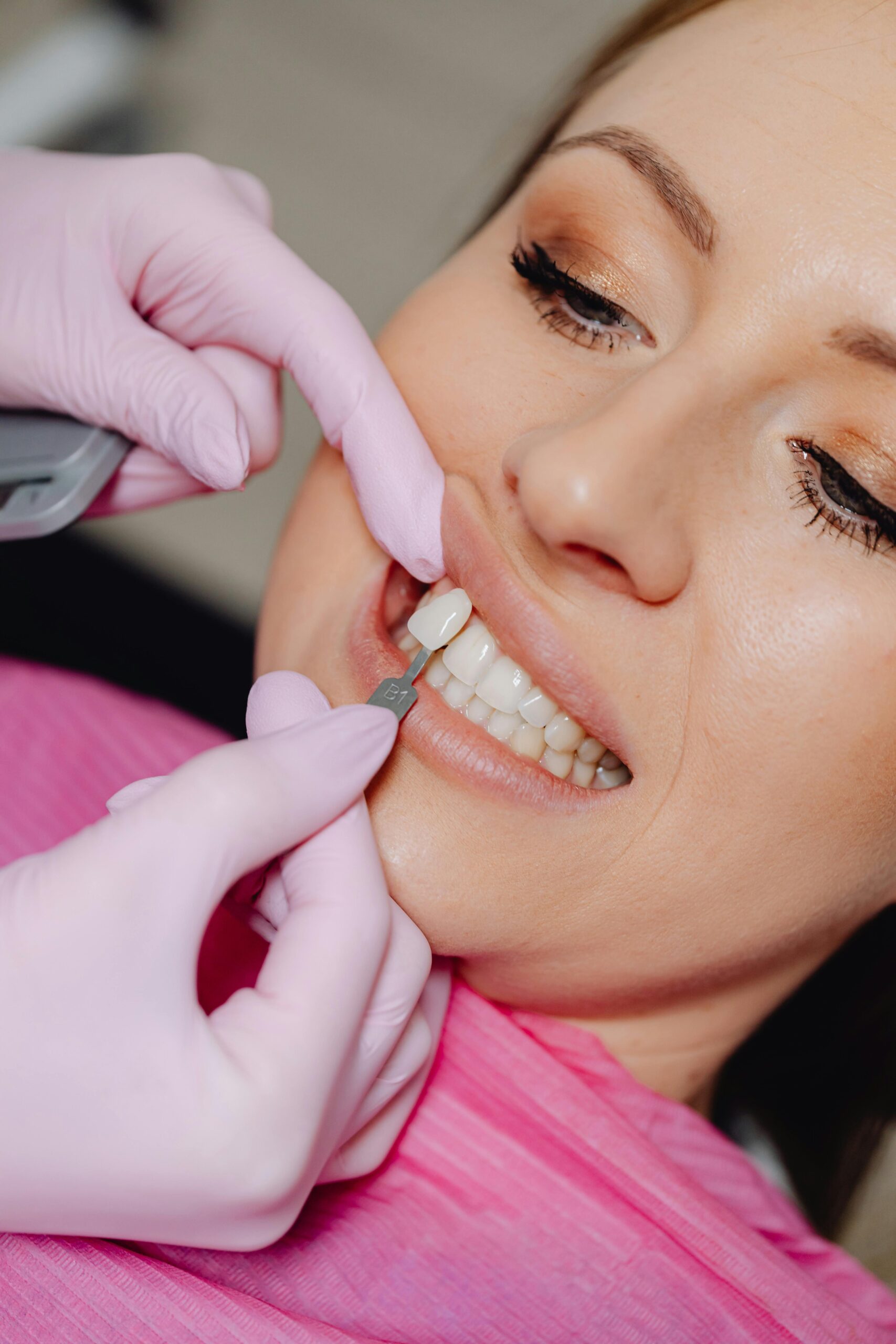
Veneers are thin restorations, usually made from porcelain or sometimes high-quality composite, bonded to the front of the teeth. Their purpose is not merely to cover flaws. They allow the dentist and ceramist to create a new visible shape for the tooth.
That may mean adding length to a worn edge, broadening a narrow tooth, softening a sharp corner, correcting a mild twist, or making a tooth look less bulky by changing line angles and contours. The key point is that the underlying tooth does not need to be severely damaged for veneers to be useful. In many cases, the patient is unhappy with shape, not function, and veneers provide a conservative way to address that concern.
Porcelain veneers are especially popular because they hold color well and mimic the way natural enamel reflects light. A well-made veneer should not look flat or opaque. It should blend with adjacent teeth and create the right amount of translucency near the edge, where natural teeth often show their character.
The tooth shape problems veneers are especially good at correcting
Some cosmetic concerns respond beautifully to whitening, orthodontics, or bonding. Others are best solved with veneers because the issue is fundamentally about form. In my experience, veneers shine when the concern involves visible front teeth and the patient wants a controlled, durable change.
They are commonly used for teeth that are naturally undersized, particularly peg laterals, which are small or tapered lateral incisors. They are also effective for worn front teeth, where the edges have shortened over time from grinding, age, or acidic wear. Minor chips, uneven corners, and asymmetrical incisal edges can often be corrected with less drilling than patients expect.
Veneers can also help when a tooth is slightly rotated or positioned in a way that makes it look misshapen, as long as the underlying alignment problem is mild. In those situations, a veneer can visually straighten the tooth by changing what the eye sees. It does not move the tooth in the bone the way braces or aligners do, but it can create the appearance of better alignment when the discrepancy is limited.
Spacing is another common reason people explore Veneers. Small gaps between front teeth often result from tooth size rather than true crowding or bite problems. If the teeth are simply too narrow for the space they occupy, veneers can close those gaps naturally by widening the visible surfaces while maintaining realistic proportions.
Shape correction is part science, part artistry
Patients sometimes assume cosmetic dentistry is mostly a matter of making teeth white and even. The technical reality is more nuanced. Correcting tooth shape requires an understanding of dental anatomy, phonetics, bite forces, and facial aesthetics all at once.
For example, the two upper central incisors are usually the visual anchors of the smile. Their length, width, and edge position influence almost everything around them. If they are made too long, the smile can look artificial and speech may feel different at first. If they are too short, the result may look unfinished. Lateral incisors typically sit slightly behind or beside the centrals in a way that creates rhythm. Canines need enough prominence to look natural, but too much can make the smile appear aggressive or heavy.
Even tiny alterations matter. A fraction of a millimeter at the edge of a front tooth can change how youthful it appears. The angle https://cruzaszp701.fotosdefrases.com/the-complete-guide-to-veneers-in-calabasas-ca of the corners affects softness. The transition lines on the face of the veneer determine whether the tooth reads as broad or slender. This is where experienced cosmetic planning makes a difference. Good veneer cases do not just replace enamel with porcelain. They solve a visual problem through careful design.
The consultation process usually reveals more than the patient expects
A thorough veneer consultation should go beyond a quick glance and a price quote. The best cosmetic evaluations involve photographs, bite analysis, discussion of goals, and often a conversation about what the patient dislikes in very specific terms. “I hate this tooth” is understandable, but a dentist needs to know whether the issue is width, edge shape, color, positioning, or symmetry.
A patient might point to one front tooth and say it looks too large. On closer inspection, the opposite tooth may actually be too short, creating the illusion that the first tooth is oversized. Another patient may complain about crookedness, when the deeper issue is wear that made the edges jagged and uneven. The treatment plan changes depending on that diagnosis.
This is especially important in areas like Calabasas, where many patients are highly appearance-conscious and often arrive with reference photos or a strong sense of the smile they want. That can be helpful, but it also requires careful translation into dental realities. A smile that looks ideal on one person may not suit another person’s face, lip movement, or tooth display.
Veneers versus bonding for shape correction
Not every shape issue requires porcelain. Direct composite bonding can also change tooth shape, and in some cases it is the better starting point. Bonding is often less expensive, can sometimes be completed in one visit, and usually removes less enamel. For a small chip, a slightly undersized lateral, or minor corner repair, bonding may be entirely appropriate.
Porcelain veneers tend to offer better stain resistance, greater long-term polish, and more refined control over translucency and contour. They also generally hold up better over time in patients with multiple front-tooth concerns, especially when several teeth need to be harmonized at once.
The decision usually comes down to scope, goals, and habits. A person who wants a subtle correction to one tooth may do very well with bonding. A person who wants to correct shape, brightness, and symmetry across the visible smile zone often leans toward veneers because they provide a more comprehensive and stable result.
When veneers are the wrong answer
A responsible cosmetic recommendation includes restraint. Veneers are powerful, but they are not the answer to every problem. If a patient has active gum disease, untreated decay, or significant bite instability, those issues need attention first. Veneers placed on an unhealthy foundation are more likely to fail or disappoint.
They may also be a poor choice when the main issue is substantial tooth misalignment that should really be corrected orthodontically. Trying to “fix” severe crowding or protrusion with veneers alone can require excessive reduction and produce bulky restorations. In those cases, aligners or braces often create a better starting point, sometimes followed by limited cosmetic finishing.
Heavy grinding is another important factor. Veneers can still work for patients who clench or grind, but the design has to account for that, and a night guard is often essential. Ignoring occlusion is one of the fastest ways to turn a beautiful veneer case into a repair cycle.
What a well-planned veneer case can change
The most satisfying veneer cases are often not dramatic in the obvious, television-makeover sense. They are the ones where people simply look healthier, more balanced, and more confident, and others cannot quite tell why.
A patient with short, flattened incisors may look less tired after the front edges are restored to a natural youthful length. Someone with tapered laterals may suddenly have a smile that feels complete. A chipped front tooth that has been drawing attention for years can disappear into symmetry. Gaps can close without making the teeth look blocky. A tooth that always looked “odd” can finally belong.
That kind of change matters because shape affects behavior. Patients often report smiling more broadly, speaking more freely, and showing less self-consciousness in photos. Cosmetic dentistry cannot solve every confidence issue, but when a visible shape flaw has bothered someone for years, correcting it can remove a real emotional burden.
The design phase is where good outcomes are won
One of the most overlooked parts of veneer treatment is the planning before any final porcelain is made. Temporary mock-ups, wax-ups, or digital previews can be extremely useful because tooth shape is hard to judge in the abstract. Many patients know what they dislike, but they need to see and feel a proposed shape before committing.
Speech is part of this. Certain sounds, especially “f” and “v,” are influenced by the position and length of the upper front teeth. So are “s” sounds. A shape that looks attractive in a still image can feel awkward if it interferes with speech or lip closure. This is why experienced clinicians evaluate smile design in motion, not just in photographs.
During this phase, details are refined. Should the edges be a little softer? Should the centrals be slightly longer? Should the canines be more rounded? The best outcomes rarely come from rushing. They come from testing, adjusting, and listening.
What patients should look for before choosing veneers
Selecting the right provider matters as much as selecting the treatment. Veneers can be transformative, but they are unforgiving of poor planning. Patients considering Veneers Calabasas CA should pay attention to both aesthetic skill and functional judgment.
- Ask to see before-and-after examples of cases involving shape correction, not just whitening.
- Find out whether the dentist uses mock-ups or provisionals to preview shape changes.
- Discuss bite habits such as clenching, grinding, or nail biting honestly.
- Ask how much natural tooth structure will be altered.
- Make sure the conversation includes alternatives like bonding or orthodontics when appropriate.
Those points reveal a lot. A dentist who welcomes that discussion is usually thinking beyond the sale and focusing on fit, longevity, and realism.
The procedure itself, in practical terms
For porcelain veneers, the process typically unfolds over a few appointments. After records and planning, the teeth may be lightly prepared, though in some cases minimal-prep or no-prep veneers are possible. That depends on the starting shape and the desired change. A tooth that needs to look less prominent may require different preparation from a tooth that simply needs added width or length.
Impressions or digital scans are then taken and used to fabricate the veneers. Temporaries may be placed while the final restorations are made. These temporaries are more than placeholders. They often provide a preview of shape and give both patient and dentist a chance to evaluate comfort, speech, and appearance in real life.
At the delivery visit, the final veneers are tried in, checked for fit and color, then bonded carefully. Bonding is technique-sensitive. Moisture control, surface treatment, and occlusal adjustment all matter. A veneer that is gorgeous in the hand can still fail clinically if bonding protocols are sloppy.
Longevity depends on design, habits, and maintenance
Patients often ask how long veneers last, and the honest answer is that there is no universal number. Many porcelain veneers serve well for years, sometimes well over a decade, but longevity depends on several variables: bite forces, oral hygiene, diet, grinding, and the quality of the original case.
The shape itself influences durability. Ultra-long edges on a patient who bites heavily edge-to-edge will be under more stress than conservative lengthening in a stable bite. Very thin porcelain added to poorly supported areas may chip more easily than a better-balanced design. This is another reason experienced planning matters. Attractive shape corrections still need to respect function.
Maintenance is straightforward but important. Veneers do not get cavities, but the teeth around and under them can. Gum health still matters. Habits like opening packages with the front teeth, chewing ice, or constant pen biting can shorten the life of cosmetic work quickly.
Aftercare that protects the new shape
Most veneer aftercare advice is simple, but it is worth taking seriously because shape refinements often involve the delicate front edges of the teeth. Patients do best when they treat veneers as strong but not indestructible.
- Wear a night guard if grinding or clenching is part of your pattern.
- Avoid using front teeth as tools for tearing, prying, or opening objects.
- Keep regular cleanings so margins and gum tissue stay healthy.
- Report roughness, bite changes, or a chipped edge early.
- Maintain realistic expectations about natural aging and occasional maintenance.
That last point matters. Cosmetic dentistry is durable, not permanent in the absolute sense. A veneer may need polishing, repair, or replacement at some point. Planning for that reality is better than expecting a one-time fix for life.
Why local expertise and communication make such a difference
There is a practical advantage to seeking Veneers Calabasas CA from a dentist who has extensive experience with cosmetic cases and a strong local reputation. Veneer treatment often benefits from collaboration and follow-up. If a temporary feels slightly bulky, if a phonetic adjustment is needed, or if the final edge needs minor refinement, access matters.
Communication matters just as much. The best veneer cases come from a clear exchange between patient, dentist, and laboratory. Patients need room to describe what bothers them, even if the concern seems small. A dentist needs to translate that concern into measurable design choices. The ceramist needs precise instructions about texture, translucency, edge shape, and proportion. When that triangle works, results feel custom rather than generic.
This is especially true for shape correction, because the goal is often subtle. A patient may not want “perfect” teeth. They may want the same smile, just more balanced. Preserving a little individuality while removing the distracting flaw is often the real art.
Natural-looking veneers do not erase character
One concern I hear often is the fear of ending up with teeth that look too uniform or too obvious. It is a fair concern. Poorly planned veneers can flatten personality out of a smile. They can look overbuilt, overly white, or identical from tooth to tooth in a way natural teeth never are.
Well-done veneers do the opposite. They preserve enough variation to feel believable. The edges should not all mirror each other perfectly. Surface texture should catch light naturally. The proportions should suit the person’s age, facial shape, and style. Even when correcting shape significantly, the result should still look like it belongs to that face.
That is why the conversation should include not just what the patient wants fixed, but how they want the final smile to feel. Soft and natural. Crisp and polished. Subtle and age-appropriate. Those are different design briefs, and they matter.
The real value of veneers for shape correction
The strongest case for veneers is not that they can make teeth prettier. It is that they can solve shape problems with precision that few other treatments match. They can restore balance where nature, wear, trauma, or time created distraction. They can make a smile look coherent again.
For the right patient, that change is both cosmetic and practical. Better shape can improve light reflection, smile symmetry, and in some cases even the way the front teeth function together. When veneers are chosen thoughtfully, designed conservatively, and supported by good habits, they can offer one of the most elegant solutions in cosmetic dentistry.
That is why so many people exploring Veneers Calabasas CA are not chasing an extreme makeover. They are trying to correct a shape issue that has bothered them for years, perhaps decades. The goal is often modest on paper, but meaningful in daily life: a tooth that no longer looks chipped, narrow, worn, uneven, or out of place. Veneers can achieve that with remarkable finesse when the plan is sound and the execution is skilled.
Oaks Dental
Address: 5000 Parkway Calabasas Ste 308, Calabasas, CA 91302
Phone number: +18184312000
FAQ About Veneers Calabasas CA
How much do veneers actually cost?
In the United States, dental veneers generally cost between $250 and $2,500 per tooth, while a full set typically runs anywhere from $6,000 to $25,000. Because the procedure is classified as cosmetic and elective, dental insurance almost never covers it.
How long do dental veneers last?
Dental veneers last a long time, but they are not permanent. They mainly depend on two key types: porcelain veneers and composite veneers. On average, porcelain types last 10 to 15 years, while composite types last 5 to 7 years before they need a fix or a new set.
What is the downside of having veneers?
The main downsides of dental veneers are that the process is permanent, they can cause tooth sensitivity, and they are costly to replace.