Can Dental Implants in Calabasas CA Be Customized for Your Smile?
For most patients, the question is not whether a dental implant can replace a missing tooth. It is whether that implant can look, feel, and function like it truly belongs in their mouth. That is where customization matters.
The short answer is yes. Dental implants can be tailored in several important ways, from the position of the implant itself to the shape, shade, and contour of the visible tooth placed on top. In a place like Calabasas, where patients often care as much about natural aesthetics as long term durability, that level of detail is not a luxury. It is the difference between a restoration that simply fills a space and one that restores confidence.
When people search for Dental Implants Calabasas CA, they are often thinking about permanence. What they may not realize at first is that the best implant work is also highly personal. No two smiles have the same gum line, bite pattern, facial symmetry, or enamel color. A successful implant respects all of that.
What “customized” really means with dental implants
A dental implant is not a single piece. It is a system made of three parts: the implant post placed in the bone, the abutment that connects above the gum line, and the crown that looks like the visible tooth. Each part can be selected or designed with your anatomy in mind.
That matters because replacing a front tooth is a very different exercise from replacing a back molar. A front tooth has to match the neighboring teeth in translucency, width, length, and subtle surface texture. A molar has to carry force well and fit the way you chew. If someone grinds their teeth at night, the design may need to be stronger or slightly adjusted to reduce overload. If a patient has a thin gum type, the material choice near the gum line can make a visible difference.
Customization is not only cosmetic. It also affects comfort, speech, hygiene, and longevity. I have seen cases where a crown technically fit but trapped food because the contour was too bulky near the gum. I have also seen restorations that looked bright under office lighting but clearly mismatched in natural daylight because the color was chosen too quickly. Good implant dentistry slows down enough to get these details right.
The planning stage is where customization begins
Many patients think customization starts when the crown is made. In reality, it starts much earlier, often at the first imaging appointment.
Modern implant planning usually involves digital X-rays and, in many cases, a 3D scan known as cone beam imaging. This gives the dentist a detailed view of bone width, bone height, sinus position in the upper jaw, and the path of important nerves in the lower jaw. Those are not abstract measurements. They directly influence whether the implant can be placed in an ideal position or whether the site needs preparation first.
An implant that is off by even a small amount can create larger problems later. The crown may emerge at an awkward angle. The gum may not frame it naturally. Cleaning around it may become harder. In the aesthetic zone, especially the front upper teeth, tiny discrepancies tend to show.
This is why experienced clinicians often work backward from the final smile. Instead of asking only where the bone allows an implant, they ask where the ideal tooth needs to be, then plan the implant position that best supports that result. Sometimes that requires bone grafting or gum tissue enhancement before or during treatment. Patients occasionally hear “graft” and assume something has gone wrong. Often it simply means the dentist is investing in the final appearance and support rather than settling for a compromise.
Your existing smile shapes the final design
Customization depends heavily on what is already in your mouth. The implant crown should not be designed in isolation. It has to harmonize with neighboring teeth, opposing teeth, and the movement of your bite.
A few variables often drive the design:
- the color and translucency of nearby teeth
- the thickness and contour of your gums
- the shape of your smile line, especially how much gum shows when you smile
- the amount of space between teeth and between the arches
- the forces created by clenching or grinding
Take shade, for example. Matching a single front tooth can be surprisingly demanding. Natural teeth are rarely one flat color. They may be slightly warmer near the gum line, more translucent at the edge, and subtly reflective depending on age and enamel thickness. A well-made custom crown can mimic that variation. A generic shade match often cannot.
Then there is shape. Some smiles suit softer rounded edges. Others have flatter, more square anatomy. If a patient has worn down teeth, the dentist may need to decide whether to match that wear for consistency or subtly improve the form while keeping it believable. That kind of judgment is where experience shows.
Custom abutments can make a major difference
Patients do not usually hear much about abutments, but they play a big role in how natural the final tooth looks and feels. The abutment is the connector between the implant and the crown. In some cases a prefabricated abutment works well. In other cases, especially visible areas, a custom abutment offers better control.
A custom abutment can be shaped to support the gum tissue more precisely. That support influences how the gum drapes around the crown and whether the final result looks like a natural tooth emerging from the gum rather than an object placed on top of it. This is especially important when replacing a single central incisor, where symmetry is easy to judge and hard to fake.
Material matters too. Titanium remains the standard for strength and biocompatibility, but zirconia abutments or hybrid options may be chosen in select cosmetic cases, particularly where the gum tissue is thin and a gray show-through is a concern. Not every patient needs that level of adjustment, but in the right case it can noticeably improve the result.
The crown is where artistry becomes obvious
If the implant post is the engineering, the crown is the art. This is the visible part, and it has to earn close inspection.
Custom implant crowns are designed around more than color. They are built around proportion, texture, contour, and how they catch light. A crown that is slightly too flat can look artificial even if the shade is correct. A crown that is too bulky can make the gum look puffy and become harder to floss around. A crown that is too narrow may leave dark spaces near the gums, sometimes called black triangles, which patients often notice immediately.
Laboratory communication is a major part of customization. The best outcomes usually come from detailed collaboration between the dentist and the dental lab. That can include close-up photos, digital scans, shade notes, and sometimes a custom shade appointment. For front teeth, this level of attention is often worth it. For back teeth, strength and bite integration may matter more than microscopic aesthetic nuances, but customization still counts.
In practices that prioritize high quality implant care, the provisional or temporary phase is sometimes used strategically. A temporary crown can help shape the gum tissue before the final crown is made. This is one of those steps patients do not always expect, yet it can dramatically improve the final contour. The gum is living tissue. It responds to pressure, shape, and healing time. Skilled implant dentists use that biology rather than ignore it.
Not every smile needs the same level of customization
There is a practical side to all this. Some patients need a highly customized single tooth in the front of the mouth. Others need an implant in the back where appearance matters less and chewing strength matters more. The treatment approach should reflect that difference.
If a missing tooth is a lower molar, the priorities may be implant diameter, crown durability, and bite force distribution. If the missing tooth is an upper lateral incisor, the priorities often shift toward gum symmetry, emergence profile, and shade layering. Both cases deserve precision, but not the same kind.
This is also where budget discussions become more realistic. Customization can influence cost. A custom abutment, layered ceramic crown, soft tissue graft, or additional imaging may increase the fee. That does not mean every optional upgrade is necessary. It means the treatment should be matched to the case, not sold as one-size-fits-all.
In my experience, patients are happiest when the conversation is honest. If a detail will meaningfully improve appearance or long term maintenance, it should be explained clearly. If it adds expense without much practical benefit for that specific tooth, that should be said too.
Gum tissue can matter as much as the tooth itself
One of the most overlooked parts of implant customization is the soft tissue around the restoration. People tend to focus on the visible crown, but the gums frame the tooth. If the frame is uneven, the result may look “off” even when the crown itself is beautifully made.
Thin gum tissue presents one set of challenges. It can recede more easily and may reveal underlying materials. Thick tissue is often more forgiving, but it still needs proper shaping. If a tooth has been missing for a long time, the ridge where the tooth once sat may have collapsed slightly, creating a dip in the gum contour. In those cases, customization may involve tissue grafting or contour management, not just crown design.
This is especially relevant for patients considering Dental Implants Calabasas CA in the front of the mouth. In high visibility cases, dentists often evaluate smile line carefully. Someone who shows a lot of gum when smiling usually benefits from more detailed tissue planning than someone whose upper lip covers most of the gum line.
Healing patterns also differ from person to person. Some patients develop ideal soft tissue contours quickly. Others need more time or staged adjustments. That does not necessarily indicate a problem. It is simply part of personalized treatment.
Digital technology helps, but judgment still leads
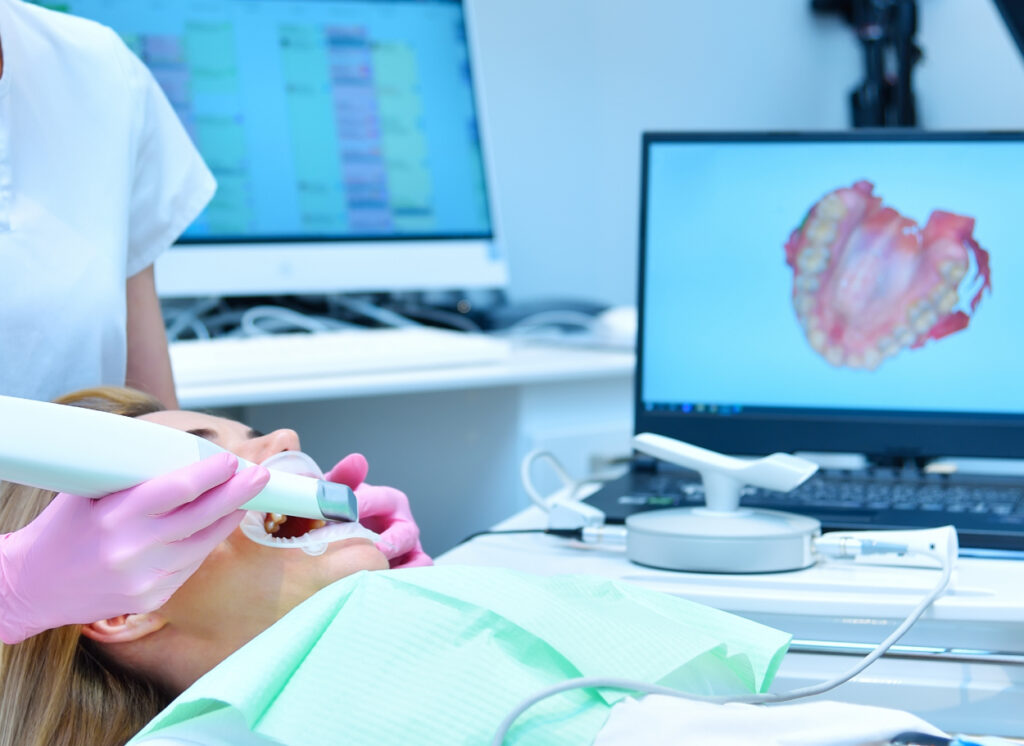
Digital scans, guided surgery, and CAD/CAM crown design have improved implant customization significantly. A digital workflow can increase accuracy, reduce surprises, and make communication between dentist and lab more precise. Surgical guides can help place implants in positions that support the final crown better. Intraoral scans can capture surrounding teeth and bite details cleanly. Digital smile references can aid aesthetic planning.
Still, technology does not replace judgment. A scan may show the anatomy, but it does not decide whether a patient would benefit from a narrower crown contour for easier cleaning, or whether a slightly warmer shade will blend better with mature natural teeth. It does not determine when a graft is prudent or when waiting a few extra weeks for tissue maturation will improve the result.
That is why case selection and clinician experience matter so much. The tools are excellent. The hands and eyes using them still matter more.
What happens if you already have an implant that does not look right?
This comes up more often than people expect. Some patients already have an implant but are unhappy with how it looks. The crown may feel too large, too square, too white, or slightly misaligned. Sometimes the gum line is uneven. Sometimes food catches around it. Not every unsatisfactory implant needs to be removed. In many cases, the visible parts can be revised.
Here are common areas that can sometimes be improved without starting over:
- replacing the crown with a better shape or shade match
- switching to a custom abutment when the current support is inadequate
- reshaping or grafting soft tissue to improve gum contour
- adjusting bite contacts that create pressure or discomfort
- improving cleanability if the crown contour is trapping debris
The key is diagnosis. If the implant itself was placed in a poor position, cosmetic revision may have limits. Sometimes a crown remake can disguise the issue enough for acceptable function and appearance. Other times, particularly in demanding front-tooth cases, the deeper position of the implant becomes the controlling problem. Patients deserve a direct explanation of those limits before investing in revision work.
The role of facial features and age in smile design
A custom smile is not just about matching the adjacent teeth. It also has to suit the person’s face. This is where the best implant work becomes subtle. A tooth that looks perfect in isolation may still feel wrong if it does not fit the patient’s facial proportions, lip support, or age.
Younger smiles often show more incisal edge, which is the lower edge of the upper front teeth. Over time, wear and soft tissue changes can alter that display. A dentist designing a front implant crown should consider how much tooth shows at rest, how the lips move in speech, and whether the patient wants the restoration to blend quietly or rejuvenate the smile a bit.
There is a balance here. Over-designing a single implant crown can be just as problematic as under-designing it. If one restored tooth looks too bright, too smooth, or too perfectly shaped compared with its neighbors, it can stand out for the wrong reasons. Often the most successful custom implant is the one no one notices.
Questions worth asking at a consultation
A good implant consultation should make room for more than “Can you place the implant?” Patients who care about customization should ask how the final appearance will be planned, who makes the crown, and whether temporary shaping of the gums is part of the process when needed.
It is also reasonable to ask to see before-and-after examples of similar cases, especially single front tooth replacements. Not every office approaches aesthetics with the same level of detail. Some are heavily restorative and function focused, which may be ideal for posterior teeth. Others place extra emphasis on smile zone artistry. There is no universal best, only the best fit for your case.
Another useful topic is maintenance. A custom implant should not only look right on delivery day. It should be shaped in a way that allows you to keep it healthy. If a restoration is too bulky to clean comfortably, long term tissue health may suffer. Beauty and maintainability should work together.
Single tooth implants, multiple implants, and full arch cases all differ
Customization exists at every level, but the goals shift.
A single tooth implant often demands the highest level of visual blending. One mismatched tooth is easy to spot. Multiple implants require attention to spacing, bite balance, and consistency across several restorations. Full arch treatment Dental Implants Calabasas CA introduces another layer, because the dentist must design an entire smile and chewing system at once.
In full arch cases, customization can include tooth display, arch shape, phonetics, lip support, and the material used for the final bridge. These cases can be life changing, but they are also less about matching a natural neighboring tooth and more about creating a harmonious new baseline. Patients sometimes assume “custom” only applies to single crowns. In reality, comprehensive implant cases may involve even more design decisions.
Who is a strong candidate for a customized implant result?
Most healthy adults with sufficient bone, or the ability to build it with grafting, can be candidates for customized implant treatment. The better question is who benefits most from a higher level of aesthetic planning.
Patients missing front teeth, patients with high smile lines, patients with thin gum tissue, and patients replacing a single visible tooth often gain the most from advanced customization. So do patients who have very specific cosmetic expectations. On the other hand, someone replacing a hidden molar with limited cosmetic concern may still receive a custom restoration, but the treatment emphasis is naturally different.
Smoking, uncontrolled diabetes, poor oral hygiene, and active periodontal disease can complicate implant success and tissue appearance. Those factors do not always rule treatment out, but they raise the importance of careful planning and candid discussion. Customization cannot overcome biology if the tissues are not healthy enough to support stable results.
The real answer patients are looking for
When patients ask whether implants can be customized for their smile, they are often asking something more personal: will this look like me again?
That is the right question. The best implant dentistry does not produce a generic perfect tooth. It restores balance in a way that respects your features, your bite, your gums, and the way your natural teeth actually look. In the strongest cases, the final restoration feels unremarkable in the best possible sense. It belongs there.
So yes, dental implants can absolutely be customized, and often they should be. If you are exploring Dental Implants Calabasas CA, look for a provider who talks about planning, tissue, bite, materials, and long term maintenance, not just placement. An implant is never only a screw in bone. It is part engineering, part prosthetic design, and part visual judgment. When those pieces come together well, the result can be both durable and convincingly natural.
Oaks Dental
5000 Parkway Calabasas, Suite 308
Calabasas, CA 91302, United States
Phone: +1 (818) 412-8349
FAQ About Dental Implants Calabasas CA
How much does a dental implant cost in California?
Costs vary with the number of teeth replaced, restoration type, imaging, and any extractions or bone grafting. Request an itemized estimate after an examination; a single advertised price may not include every treatment stage.
Can people with autoimmune disease get dental implants?
Some people may qualify, but the condition, medications, oral health, and healing risks require individual assessment. Share your medical history with your dentist, who may coordinate with your treating physician.
Can you have dental implants if you have osteopenia?
Osteopenia does not by itself establish whether implants are suitable. Your dentist must evaluate jawbone support and review bone-related medications and other risks before recommending treatment.